Risky Conversations – Audio Book
27 May 2025
Poetics and Risk: Feeling into Being
4 February 2026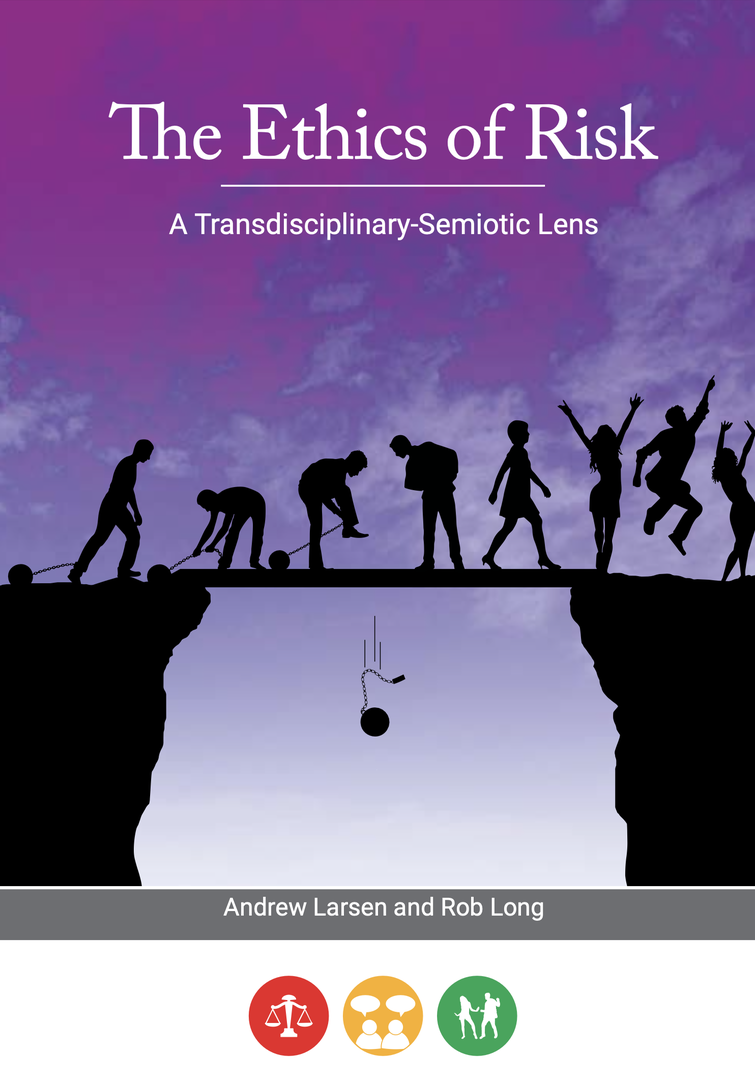
The Ethics of Risk
AUD$0.00 Inc GST
The ethics of risk must be anchored to the experience of life and living, not to the idea that everything must be ‘safe’. The purpose of life is not to be safe but to learn to live in risk, sustain life and enjoy the blessings of fallibility.
When we learn to live in community and with others we enter into moral knowing as experienced in dialectical relationship with others. We live in Socialitie and so, what we decide and do always has a moral outcome and moral purpose. We cannot move in life without risk. Risk is not the enemy of life but rather its condition.
This is a book that explores the problems of the risk and safety industry anchored to a deontological ethic. This is an ethic that supposes that humans can be impartial and objective about the nature of risk. The risk and safety industry is locked into a worldview that adores Deontology, Behaviourism, Engineering, Positivism and Scientism (D/BEPS). This worldview drives the risk and safety industry
to the naive belief in golden rules, common-sense and objective reason. We often see this expressed as ‘do the right thing’. The trajectory of this view however, results in a dehumanising ethic that places objects over subjects, regulation over relationships and power over presence.
The ethics proposed by this book is informed by a different worldview anchored to an Existentialist-Phenomenological worldview. This worldview is anchored to persons, care, helping and relationships. This methodology is the foundation of a Social Psychology of Risk (SPoR). This leads to an ethic that values subjects over objects and persons over regulation. This requires a methodology and method that
escapes the confines of compliance to regulations and advocates an eclectic-dialectic founded on an embodied and experiential approach to decision making.
In an eclectic-dialectic, all values are understood to be in competition depending on context. Rather than anchor to the absolute golden rule, an eclectic-dialectic anchors to experience, being and living as if persons matter. In this ethic, the moral meaning and ethic of living is not directed by safety but by how one lives with risk. This ethic is directed by an understanding of personhood, Socialitie and community.
The ethics of risk proposed in this book offer possibilities, openenss and learning. In this ethic, there is little anxiety about not knowing nor fear of uncertainty. Indeed, if we move away from the naive promises of deontology and certainty, we discover a new way of engaging with others in risk that enlivens one to a freedom to be in Socialitie. This is the freedom of the dance, the movement of learning and a new way of understanding risk. This is not a freedom of open licence but rather a
freedom discovered in the faith-love-hope-justice dialectic.